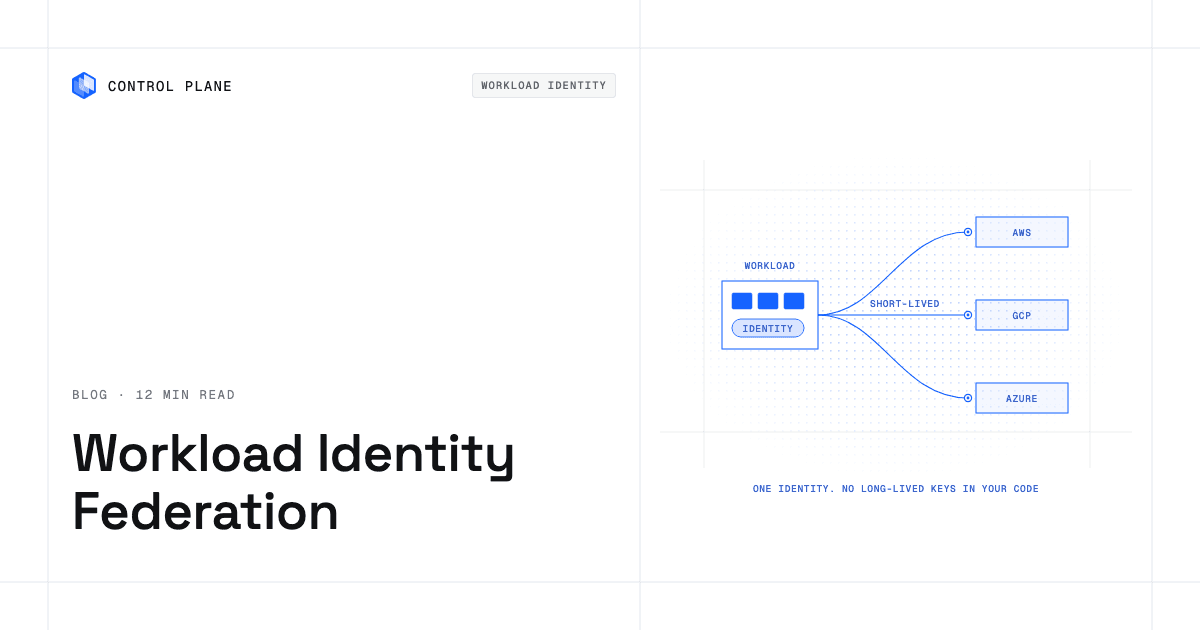
Workload identity federation replaces long-lived cloud keys with short-lived credentials. How it works on AWS, GCP, and Azure, across clouds, and in failover.
Blog
From the Control Plane blog
Cloud-native engineering, multi-cloud strategy, and platform deep-dives.
All posts
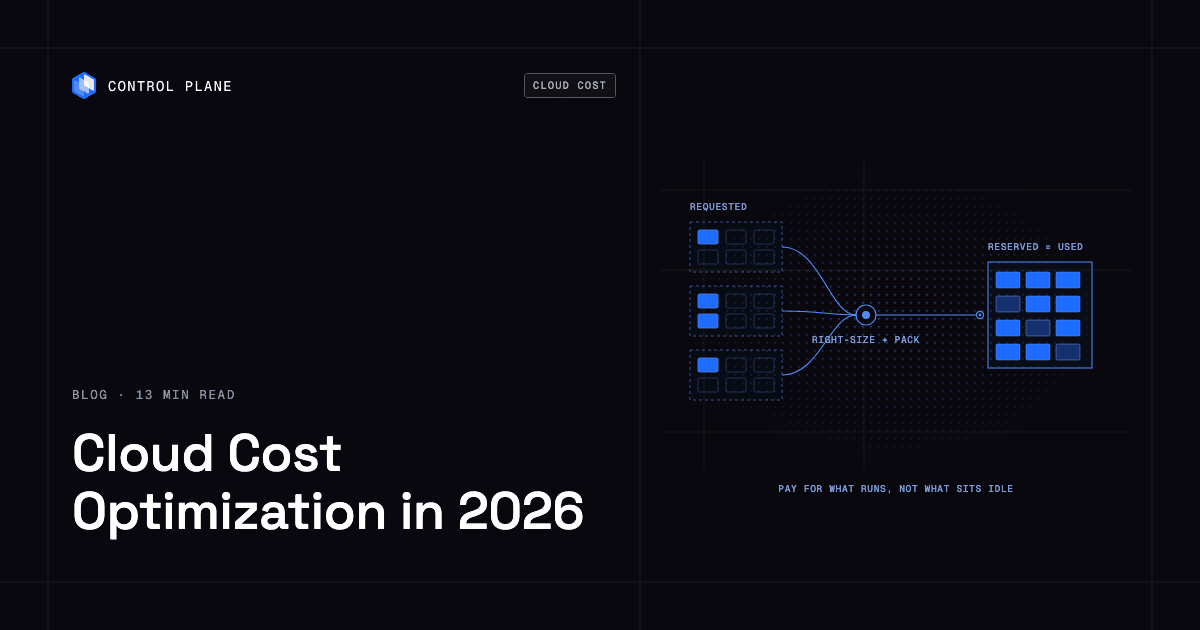
Cloud cost optimization in 2026: 10 levers that cut your compute bill, from right-sizing and bin-packing to idle standby, commitments, spot, and egress.
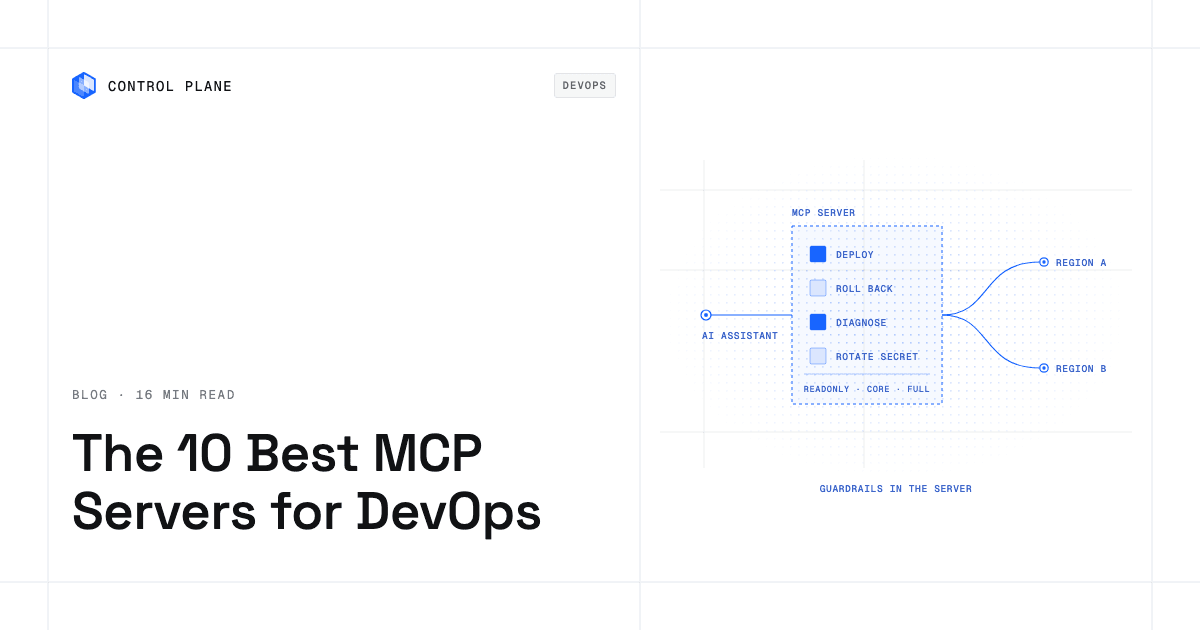
The 10 best MCP servers for DevOps and cloud infrastructure in 2026, compared on what an AI assistant can do, auth, read-only modes, and audit trails.
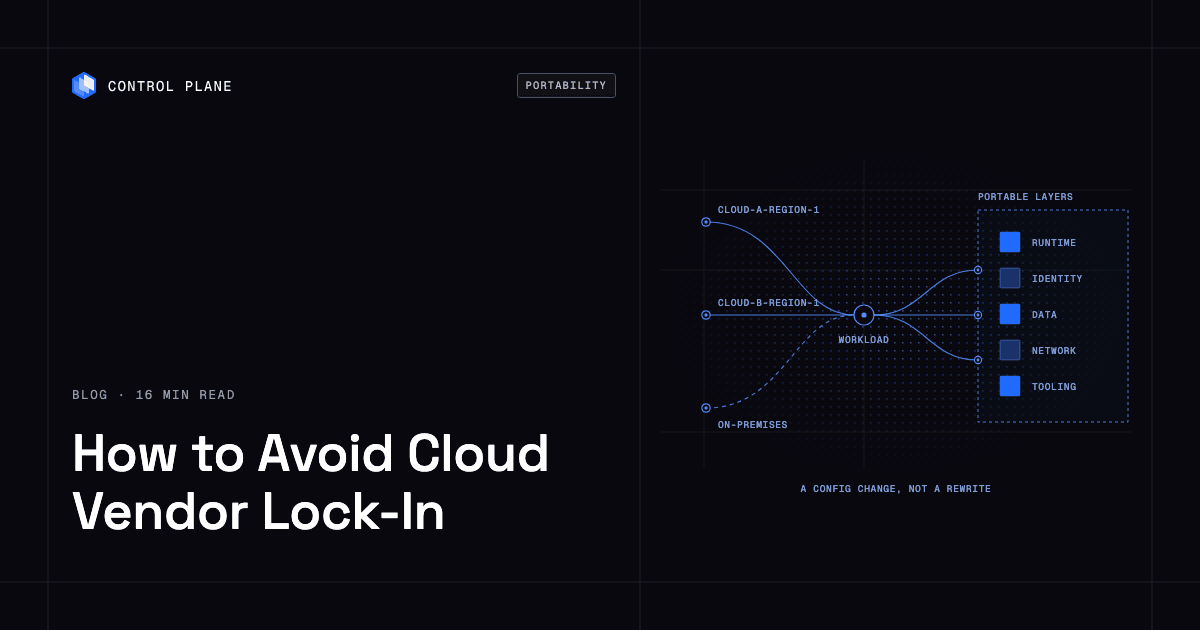
How to avoid cloud vendor lock-in: eight practices for portable compute, identity, data, networking, and tooling, plus exit terms and a self-check.
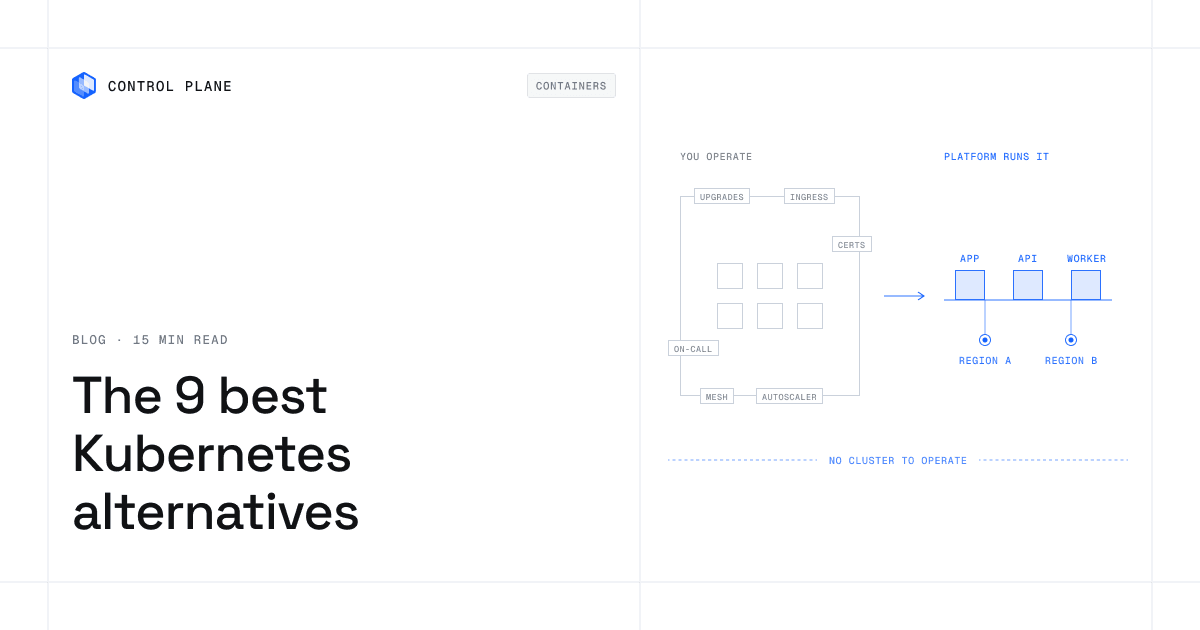
The 9 best Kubernetes alternatives in 2026, compared: run containers in production without operating clusters, on one cloud or across regions and clouds.
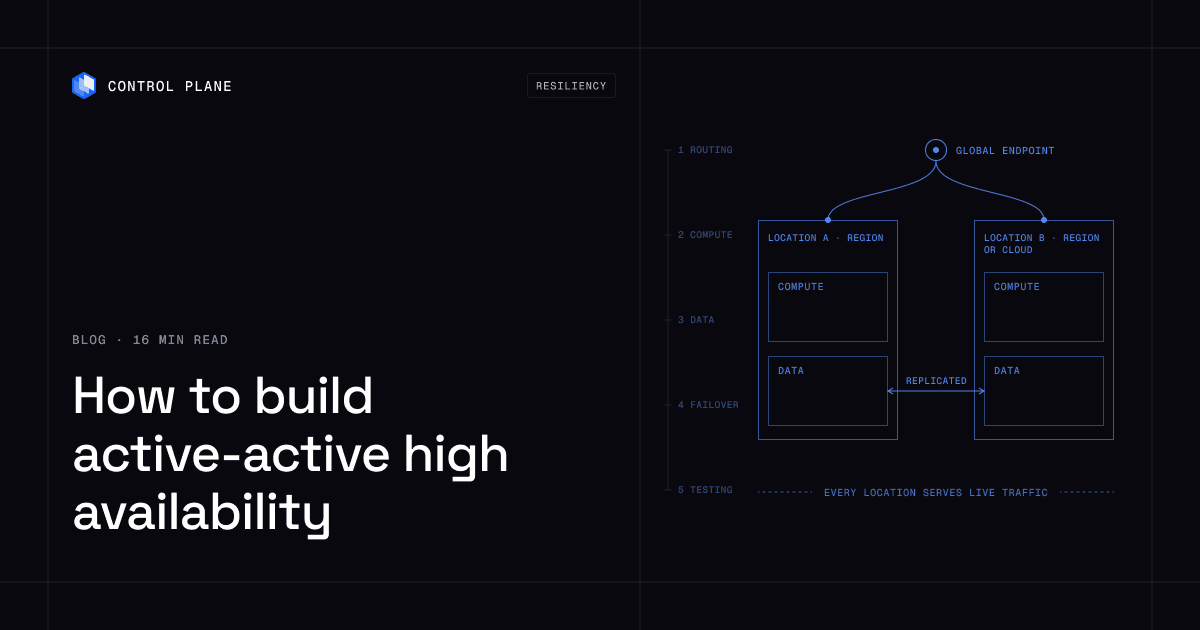
How to build multi-region active-active high availability: global routing, compute in every location, replicated data, automatic failover, and testing.
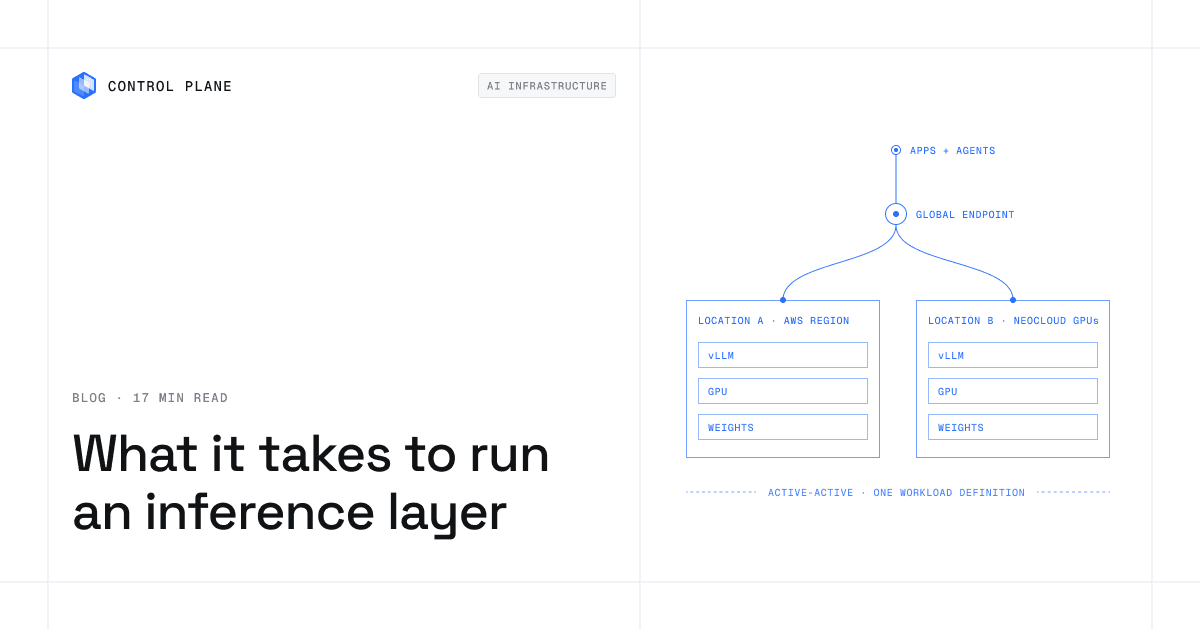
What a production inference layer needs: GPUs, serving runtimes, autoscaling, routing, weights, observability, and how to keep it up across providers.
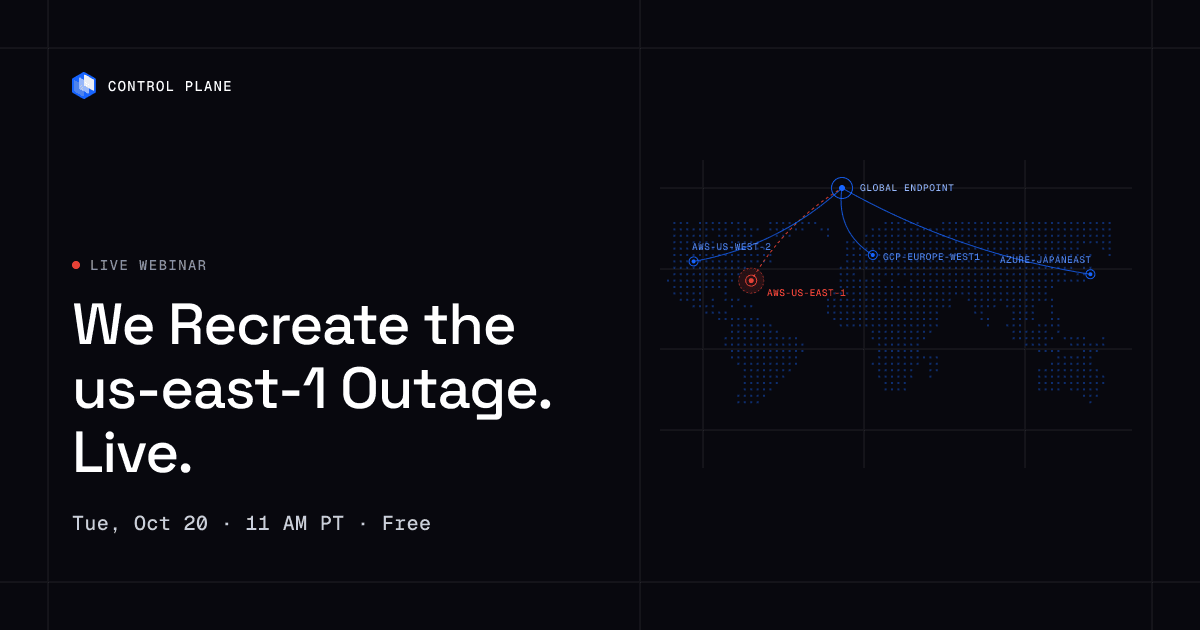
One year after the AWS us-east-1 outage, we recreate it live on Oct 20 and show how active-active apps stay up. Free webinar, 11 AM PT. Register now.
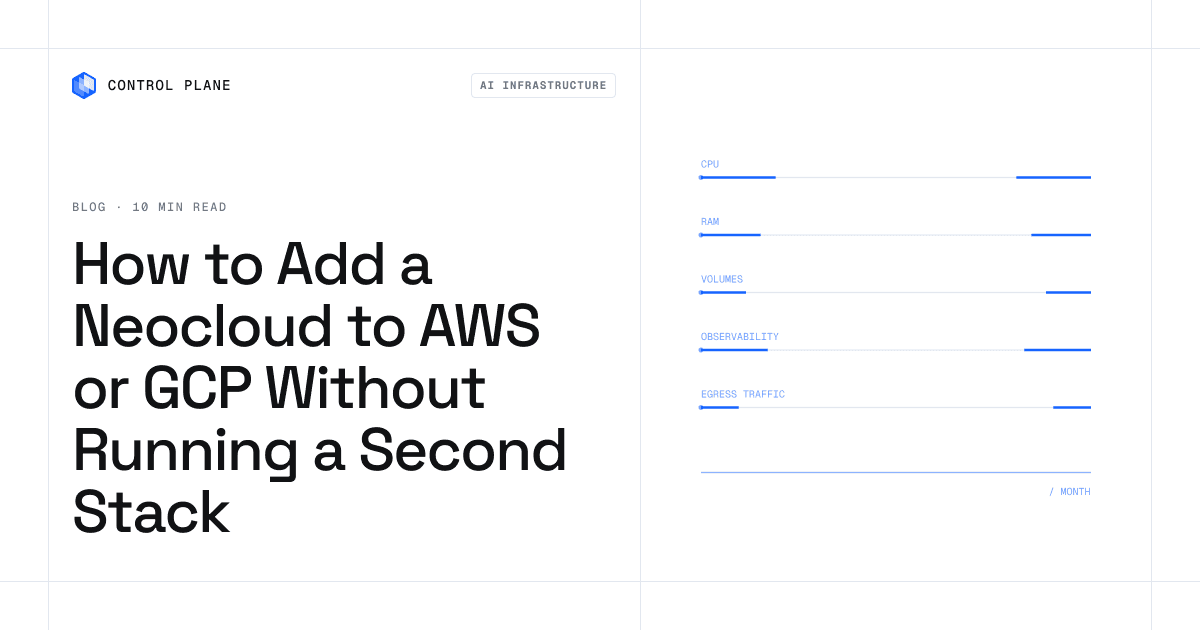
Neocloud GPU pricing for CoreWeave, Lambda, Nebius, Crusoe, Together AI, Vultr, and Runpod, re-checked November 2026, plus six criteria and how to add a neocloud to AWS or GCP without running a second stack.
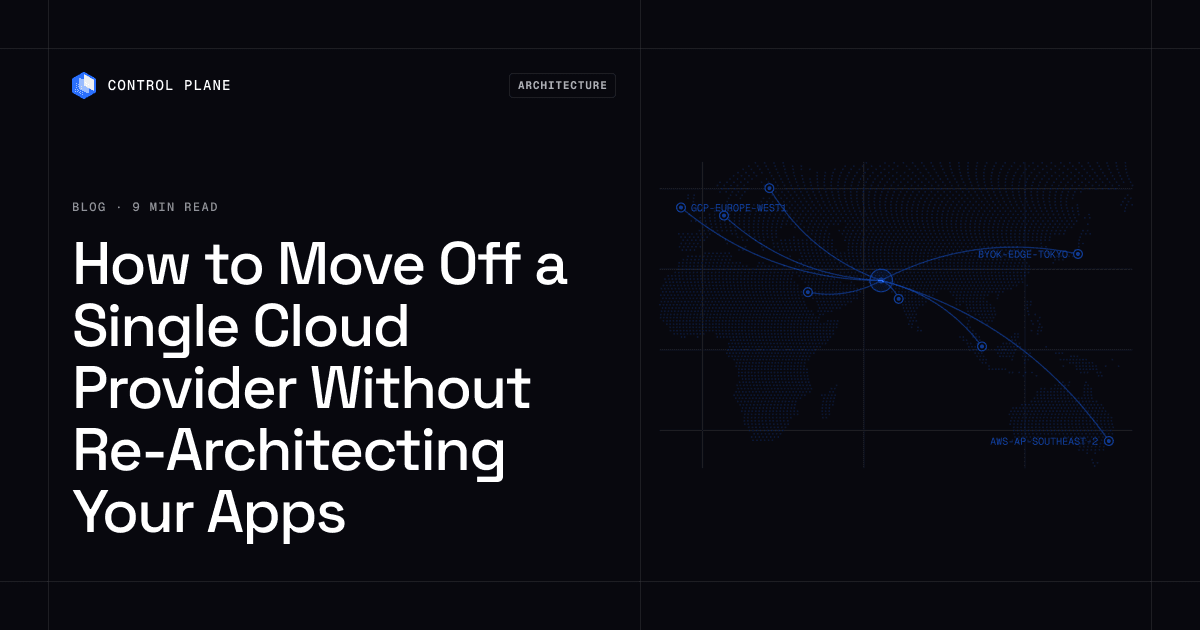
Leave a single hyperscaler without a rewrite: run your existing containers on more than one provider, keep the services worth it, and stay up when one fails.
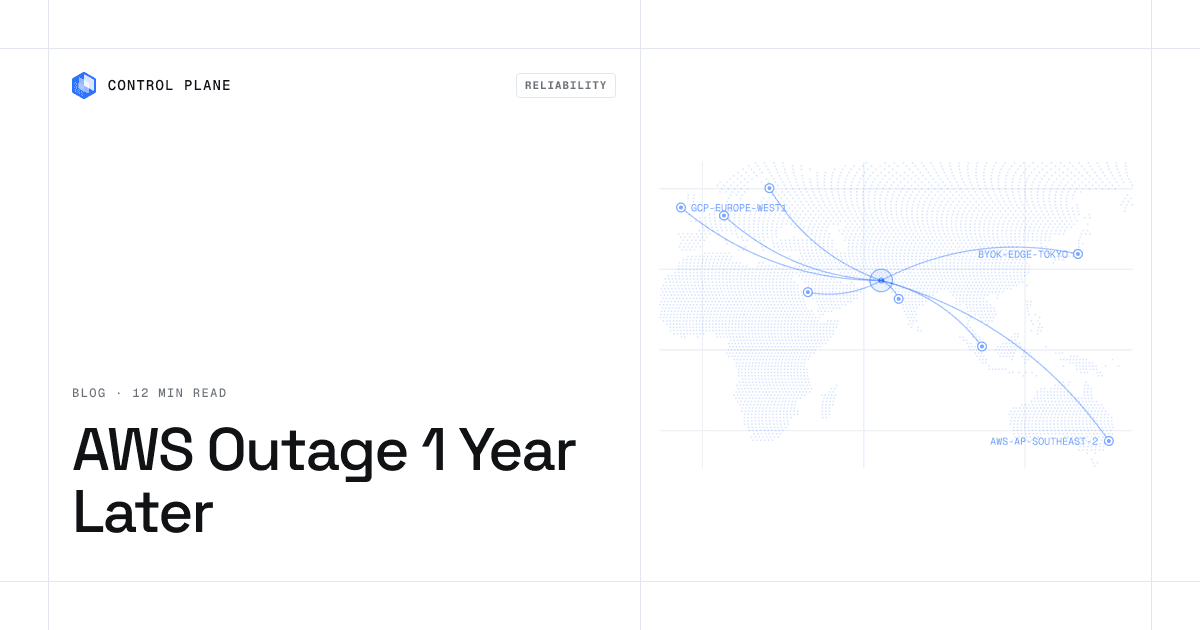
A year after the October 2025 AWS us-east-1 outage, every major cloud has failed differently. The three blast radii, and how to stay up when others are down.
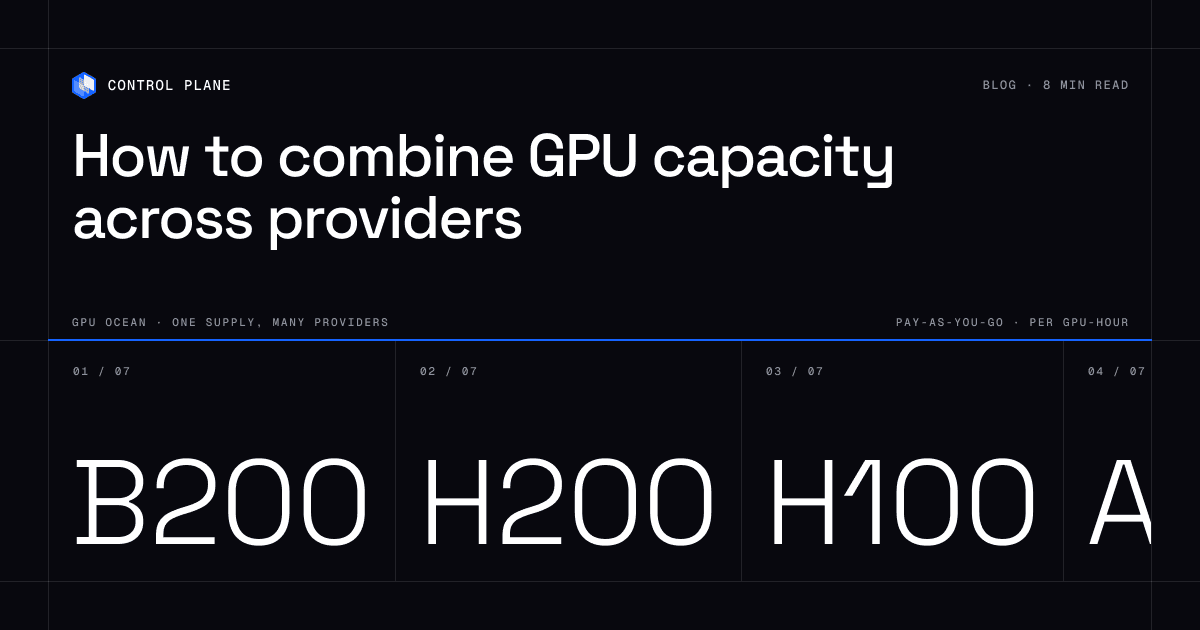
Three ways to pool GPUs from hyperscalers, neoclouds, and your own servers, with a blueprint for inference that keeps serving when a GPU pool goes down.